Inspired by Wood: as Interface
I started by messing with wood first.
At the beginning, I was trying to laser-engrave pine boards with different depths and patterns. I wanted to see how texture might change the way a surface feels.
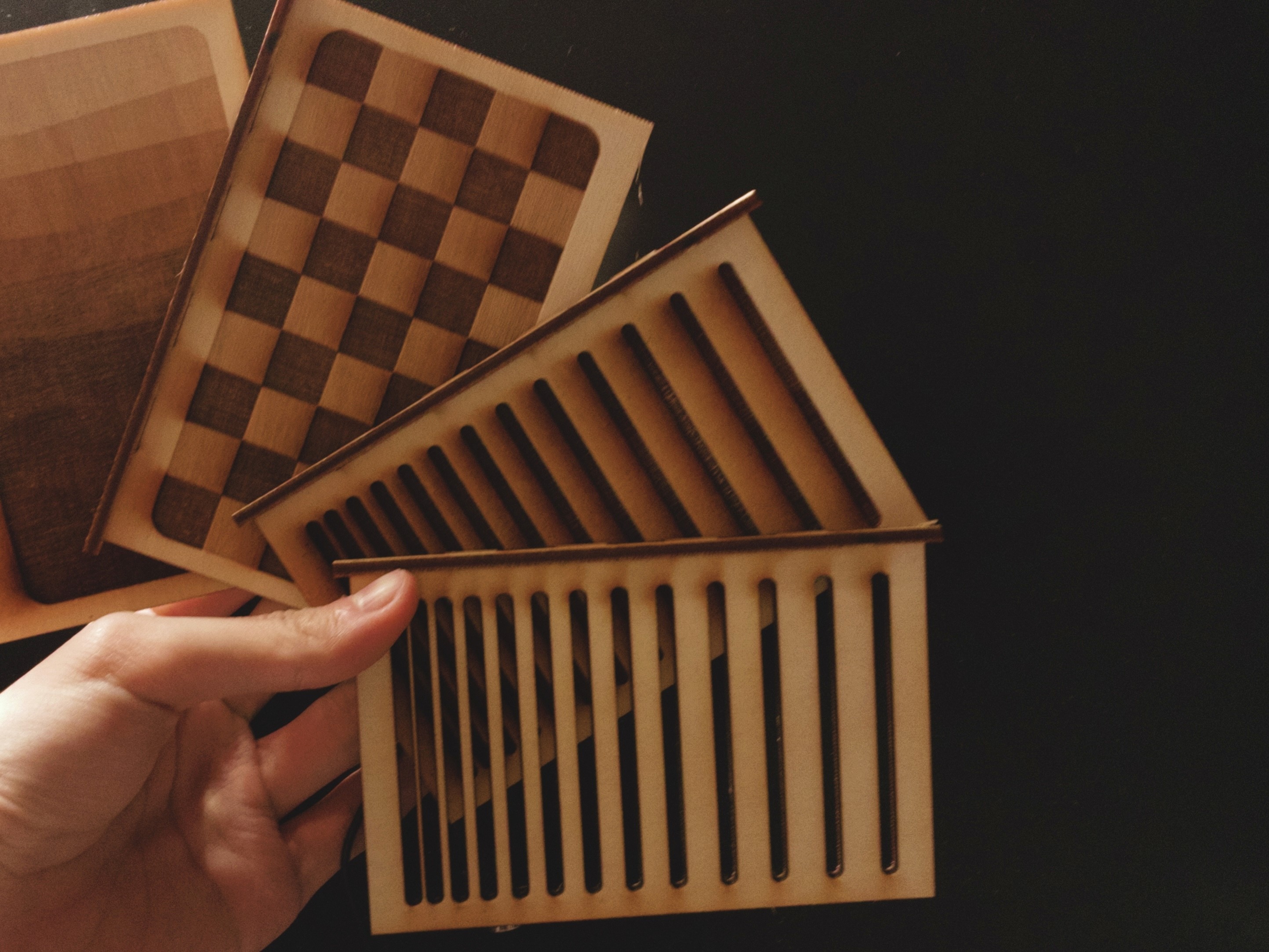
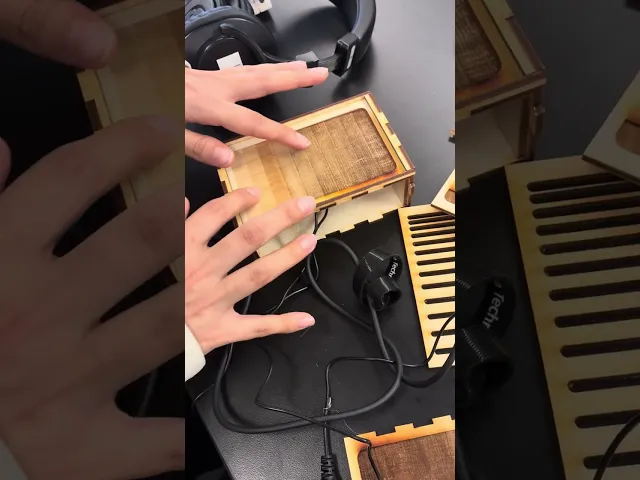
I created a box with the laser-engraved lid so it creates a resonance chamber, and then I assembled a contact microphone to it to route the audio to my laptop.
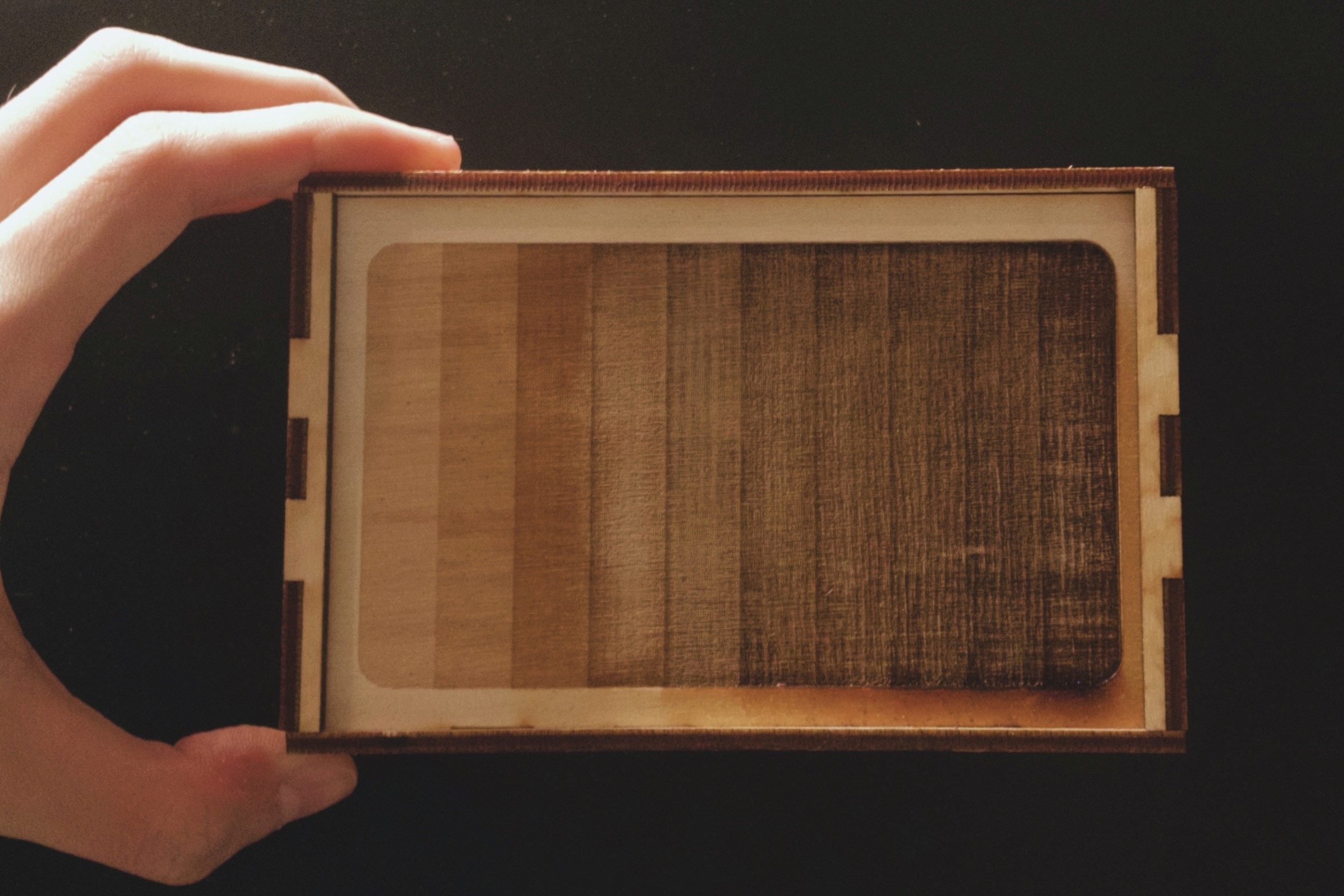
I tried to run my fingers across the surface, such as scraping, tapping, dragging, pressing, and listening through contact mics.
During the user tests, I asked the participants to try out different gestures to interact with the surface. I noticed that tiny differences in the patterns, engraving methods, and how people choose to interact with it mattered more than I expected.
A denser pattern made gestures feel heavier. Some areas responded immediately, others felt resistant.

At some point, I stopped thinking of the engravings as only aesthetics. The surface itself was shaping the sound with physical vibrations. Texture was the interface.
So instead of designing a predictable interaction, I started wondering what if the material doesn’t always respond the same way, and what if unpredictability actually act as a delight.
Driftwood: an Instrument
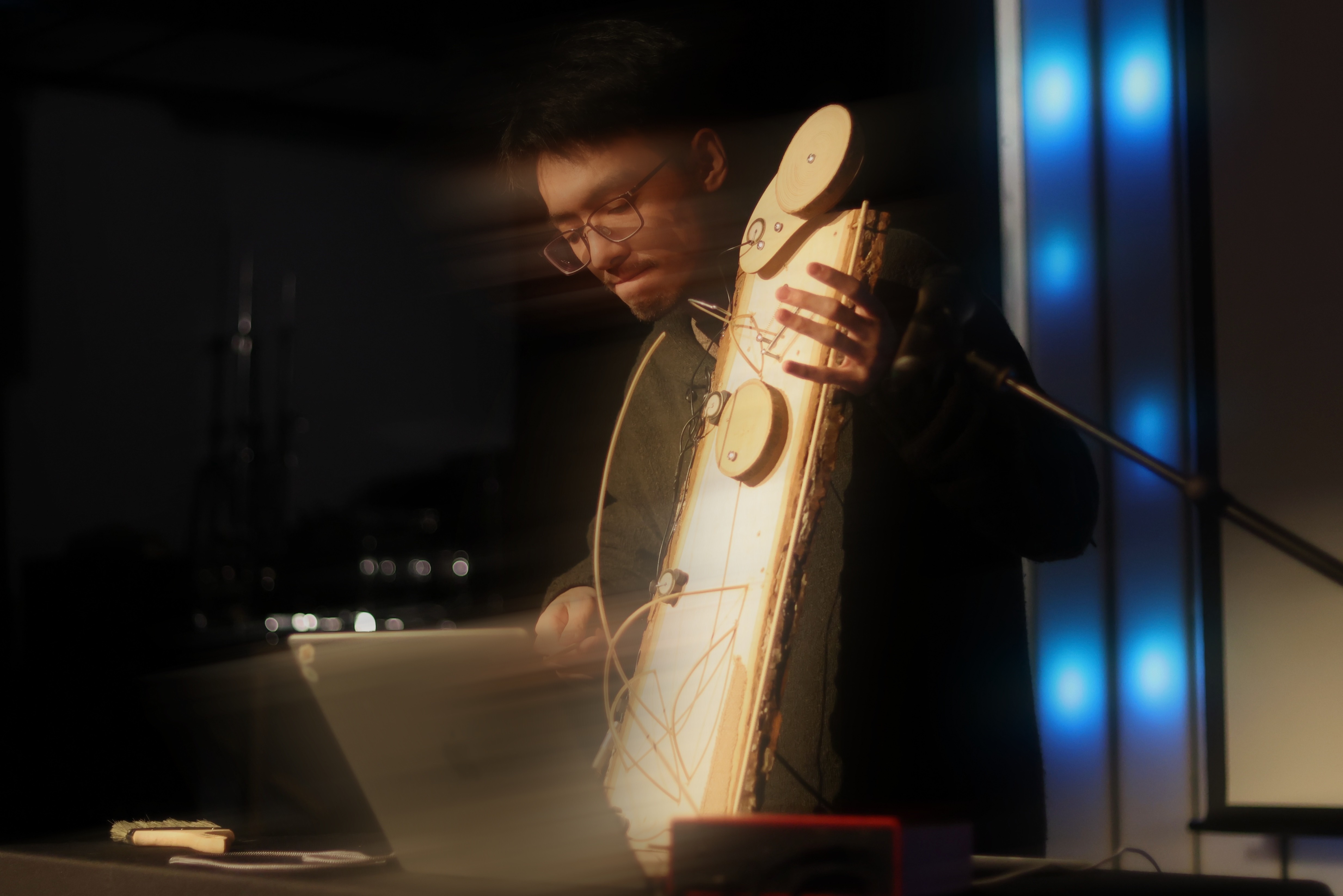
These experiments slowly pushed me to get a larger piece of basswood and start to work on it. It turned into an object I could carry, rehearse with, and perform: the Driftwood.
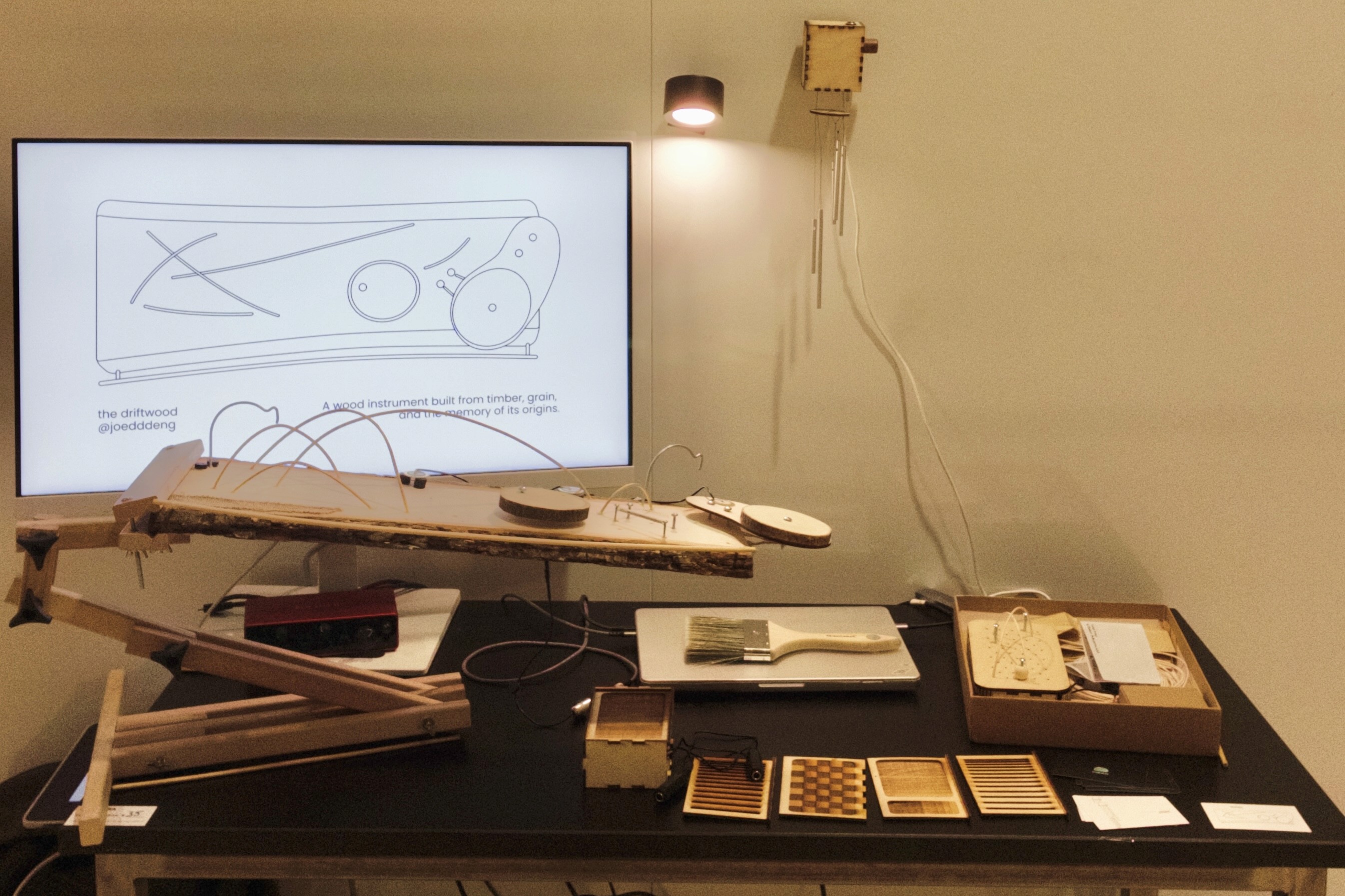
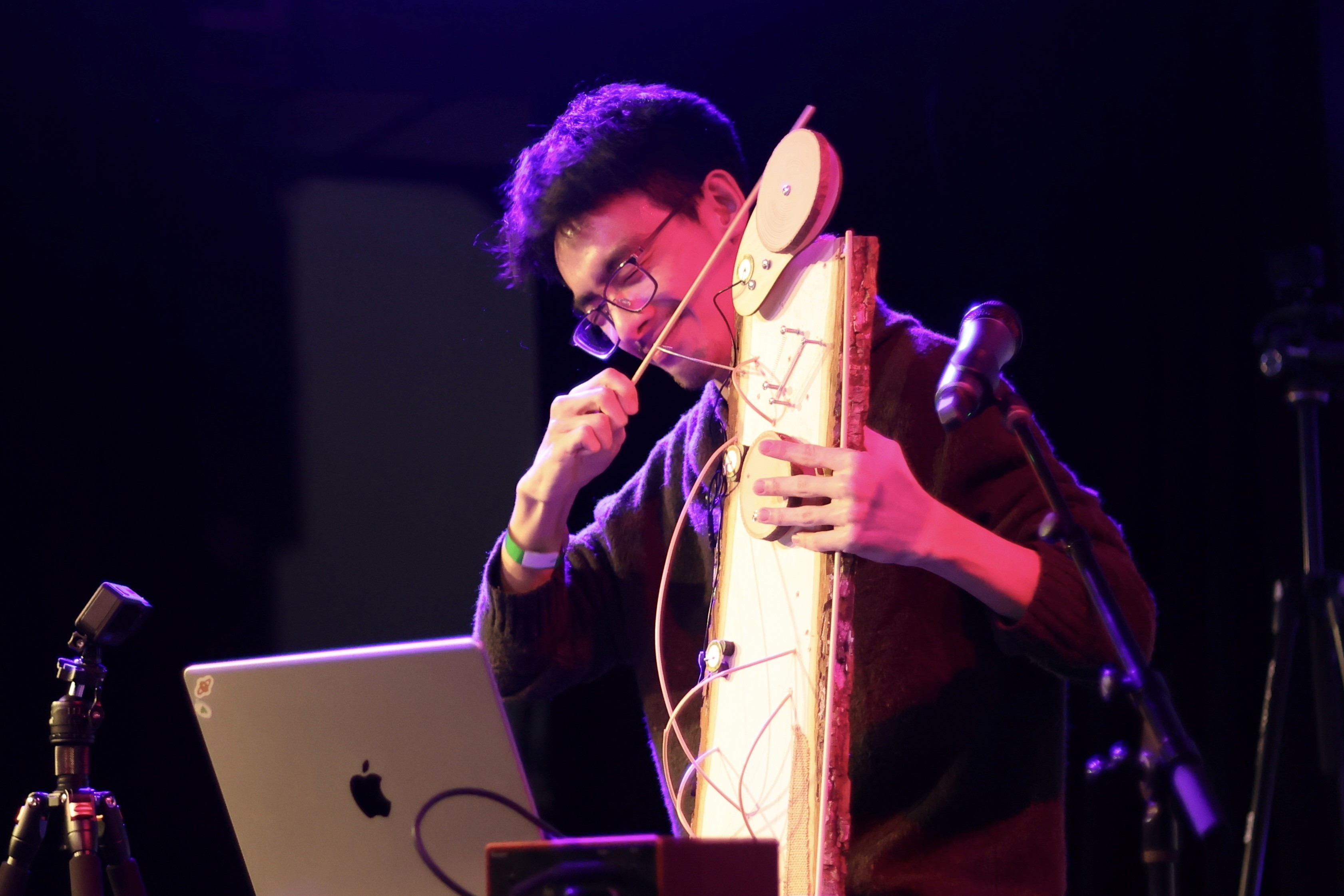
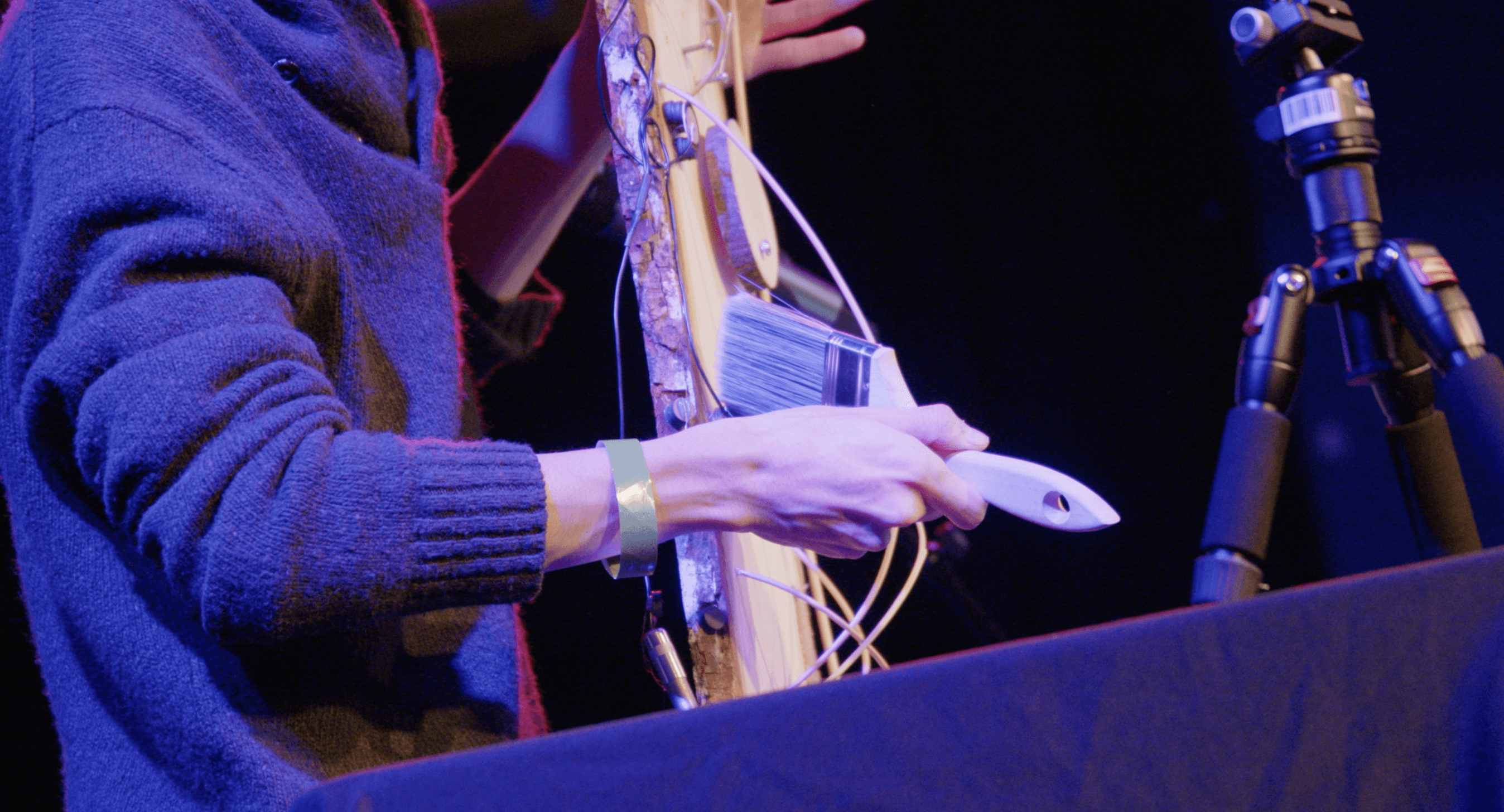
Driftwood is built from wood, metal elements, and contact microphones. The surface has rods, plates, strings, and friction areas. Each element transmits vibration differently. Some respond to light touch, others only respond with heavier pressure.
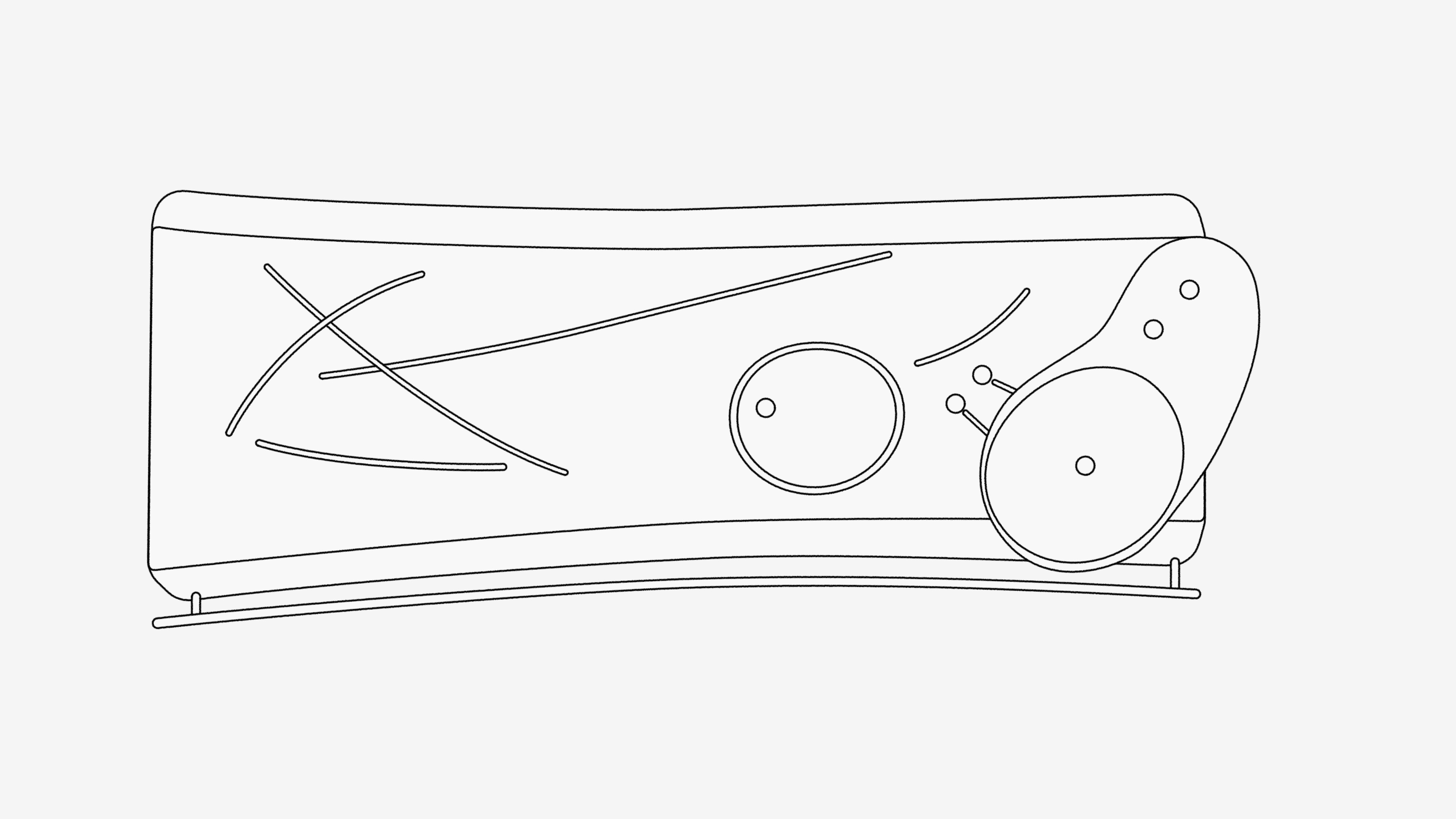
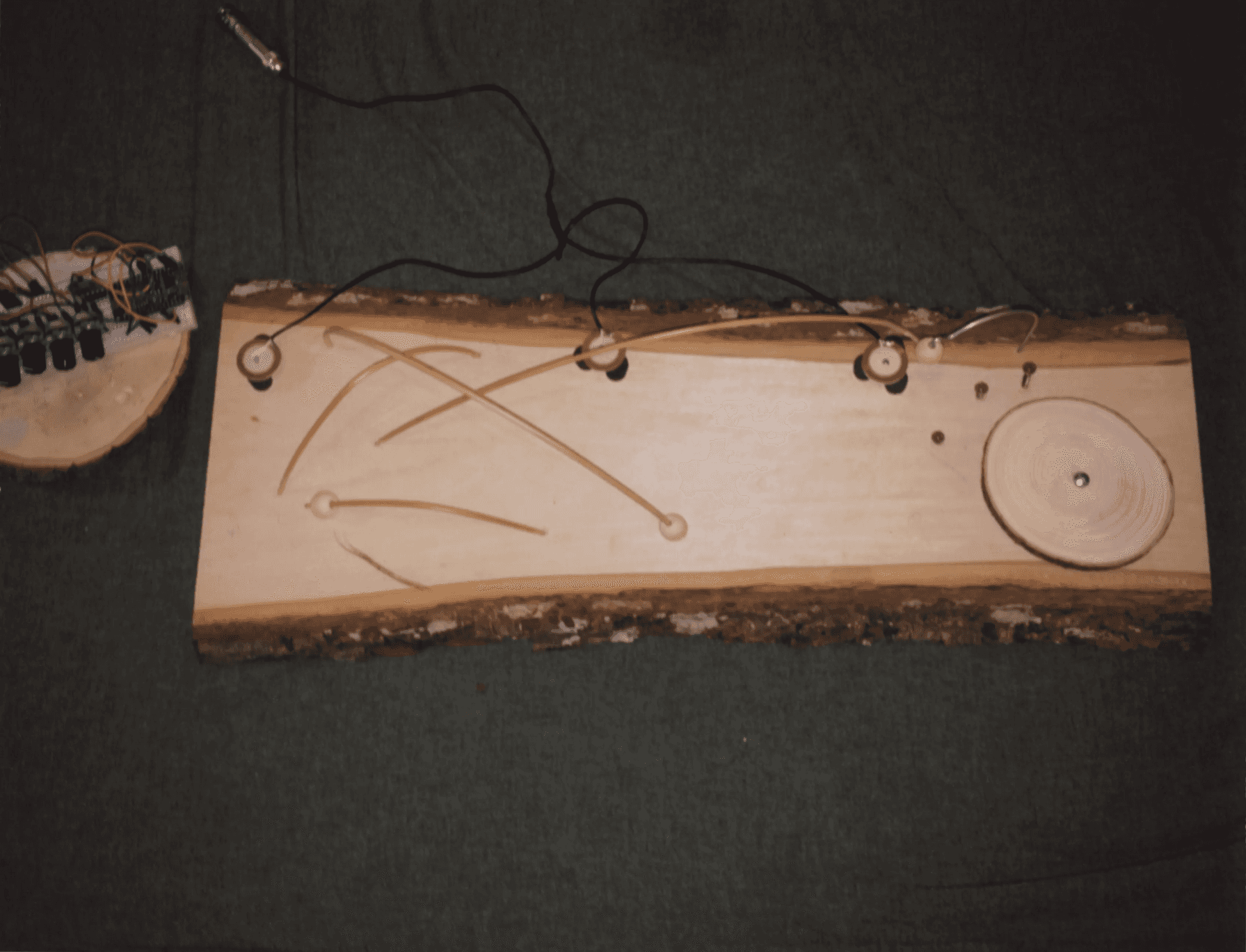
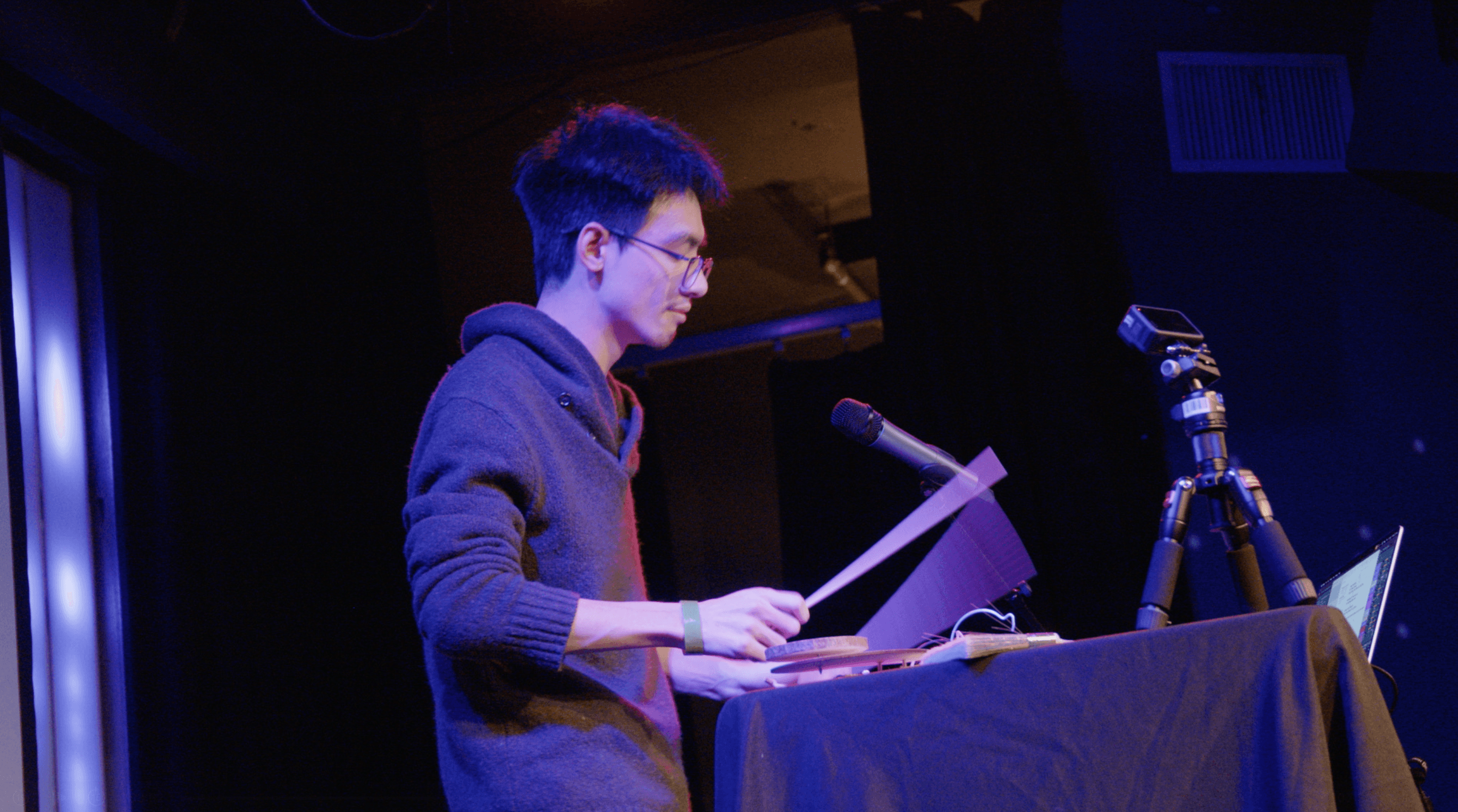
The instrument reacts to gesture and weight. The sound that came out of it is super unpredictable. Three contact mics capture vibration directly from the wood and feed it into Ableton Live, where I use a customized resonator system built with Max/MSP for post-processing.
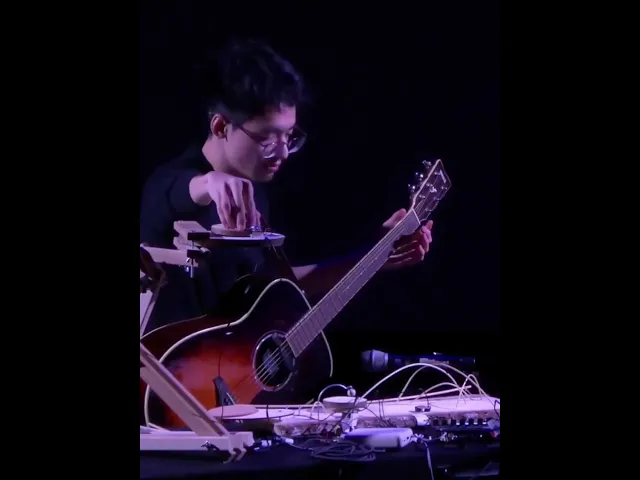
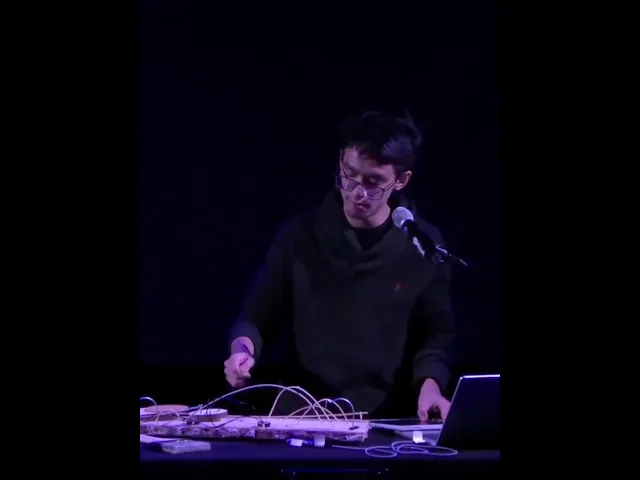
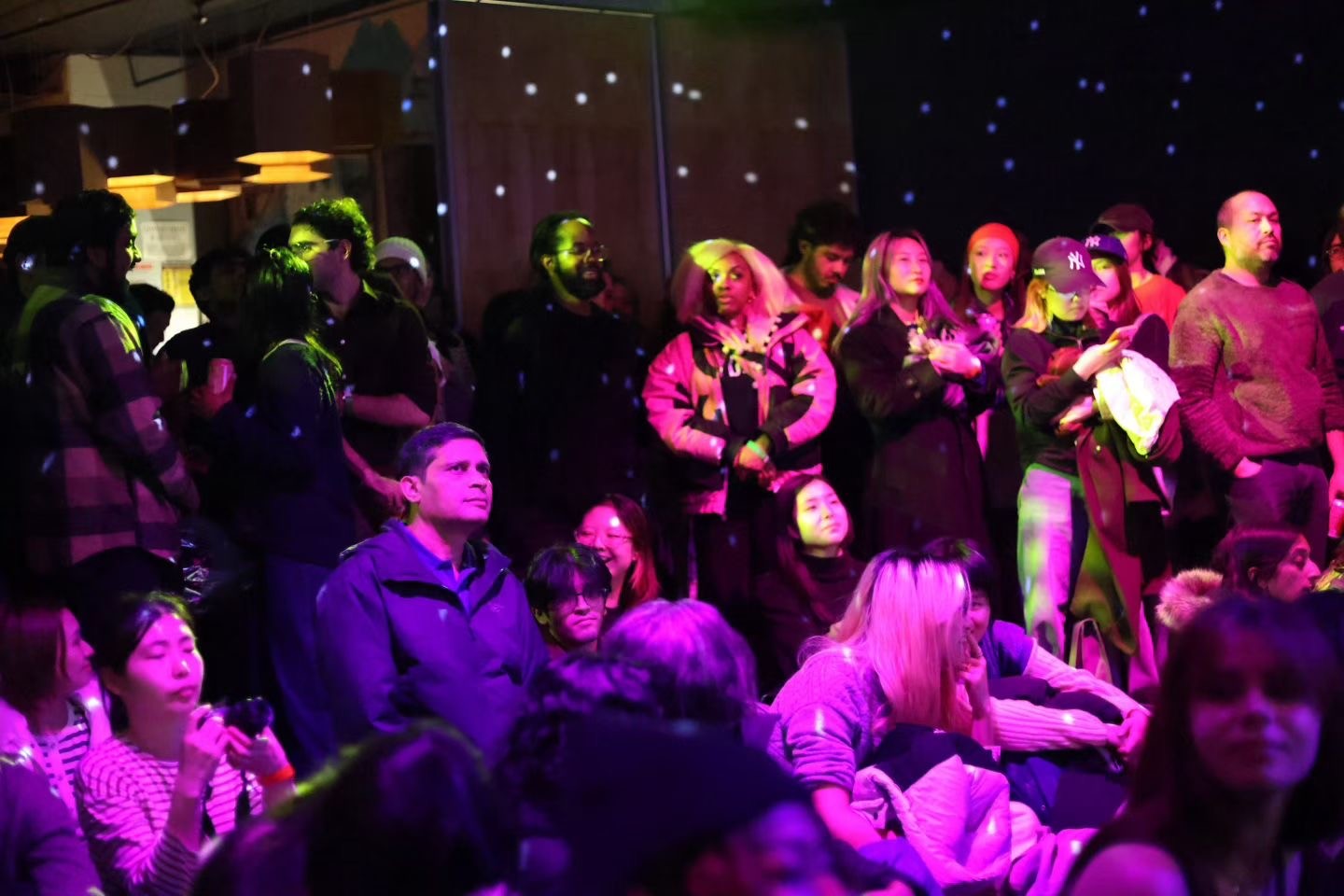
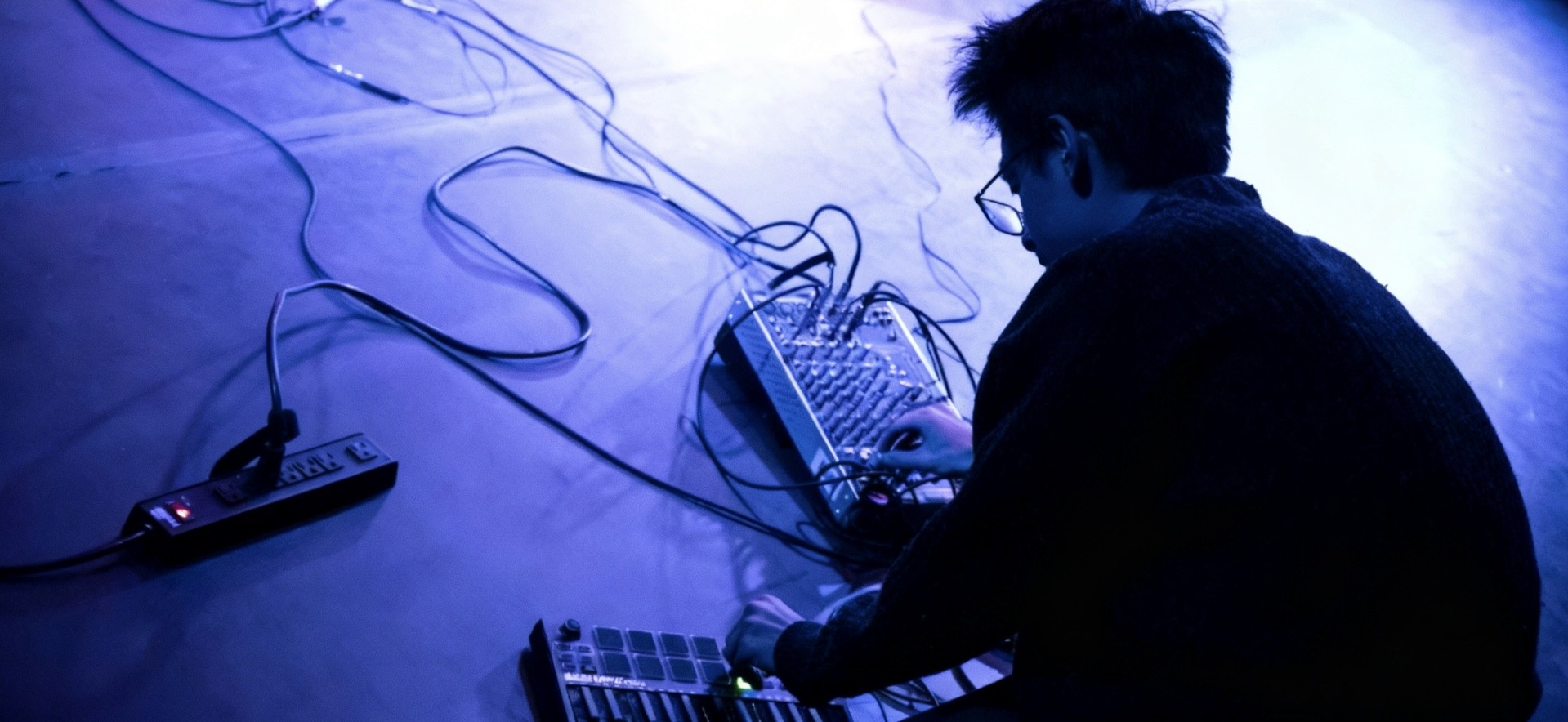
I performed Driftwood at Littlefield NYC in December 2025. During that performance, I tried to listen to the differences between different rehearsals. I grew up around natural soundscapes and learned to actively listen to subtle details. On stage, I was trying to recreate that kind of listening.
From a Personal Object to a Shareable System
After a while, Driftwood started to feel limited in a way. It was beautiful for my own performance, but also large, fragile, and personal. Only I knew how to play with it. That raised a question: if texture is something you learn through touch, how can someone else learn this without borrowing my instrument?
That led to TapTap.
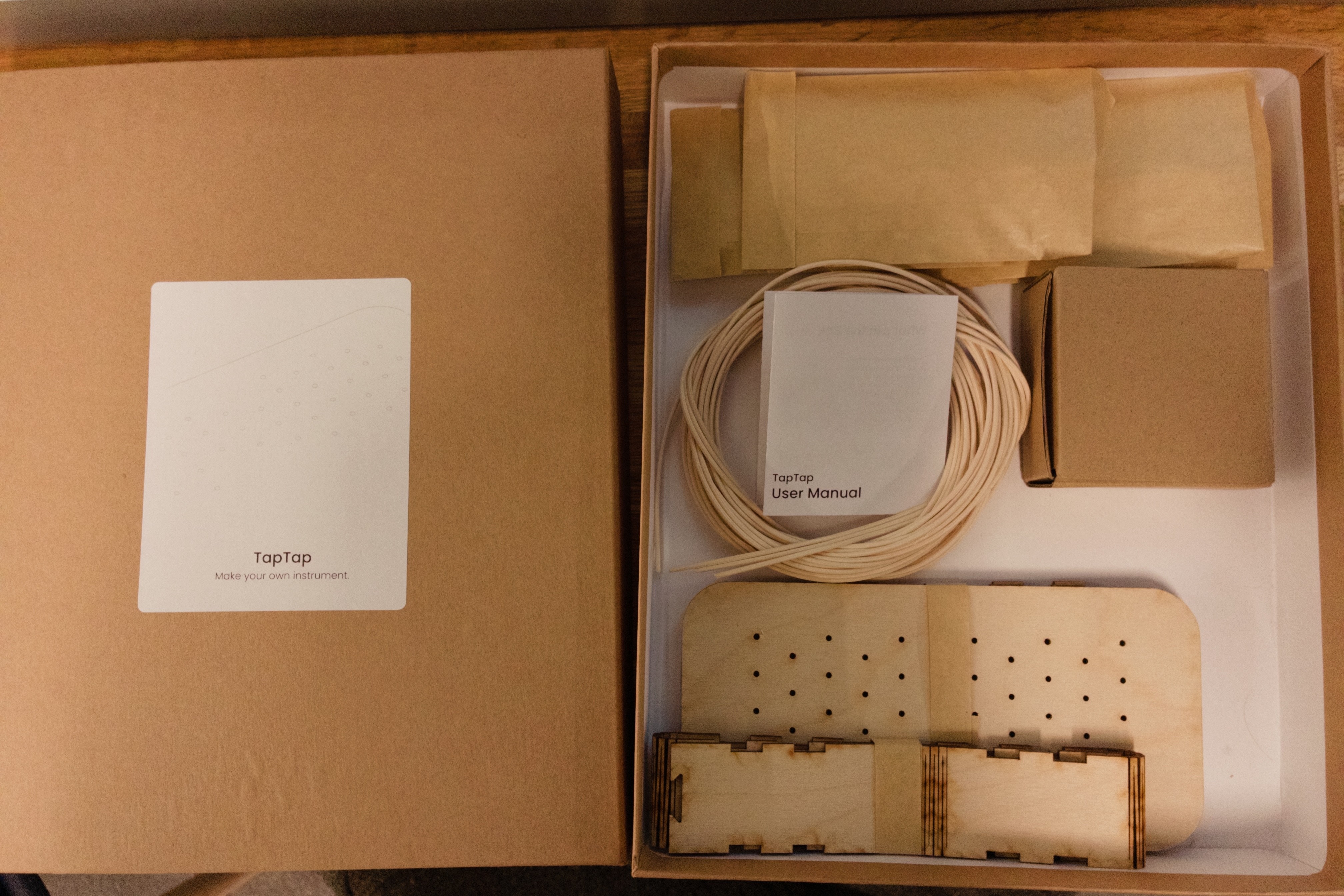
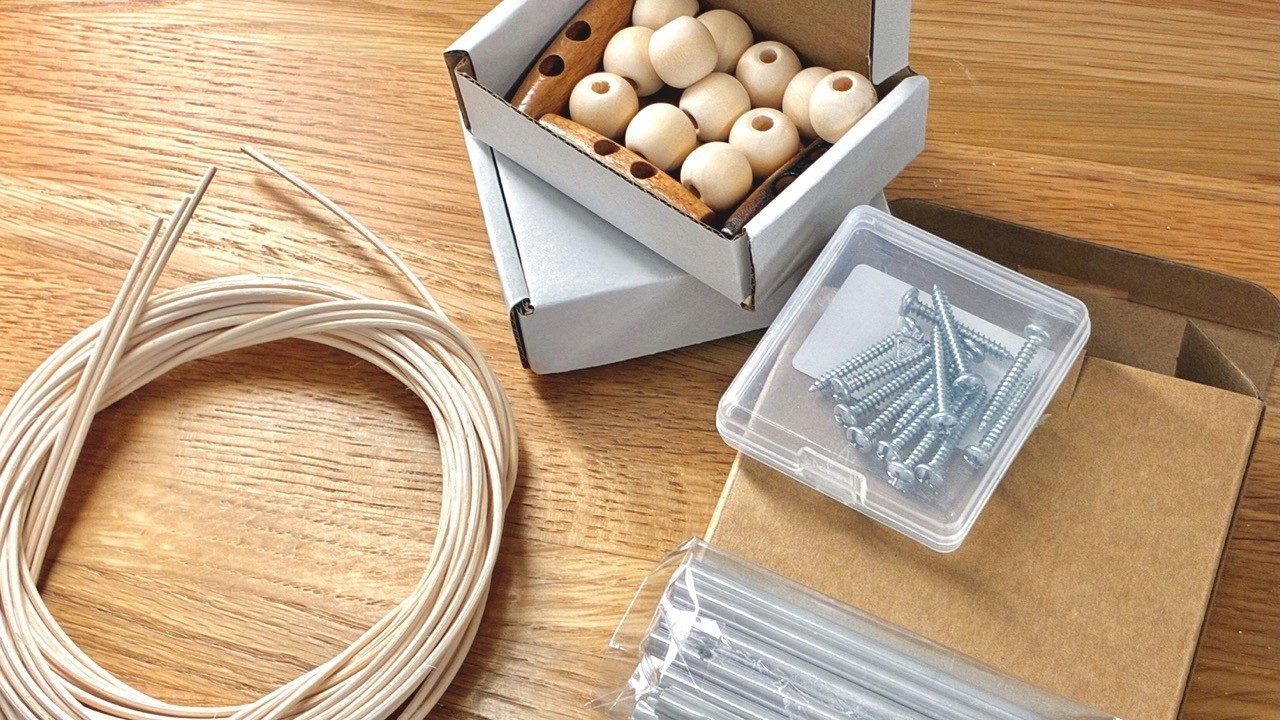
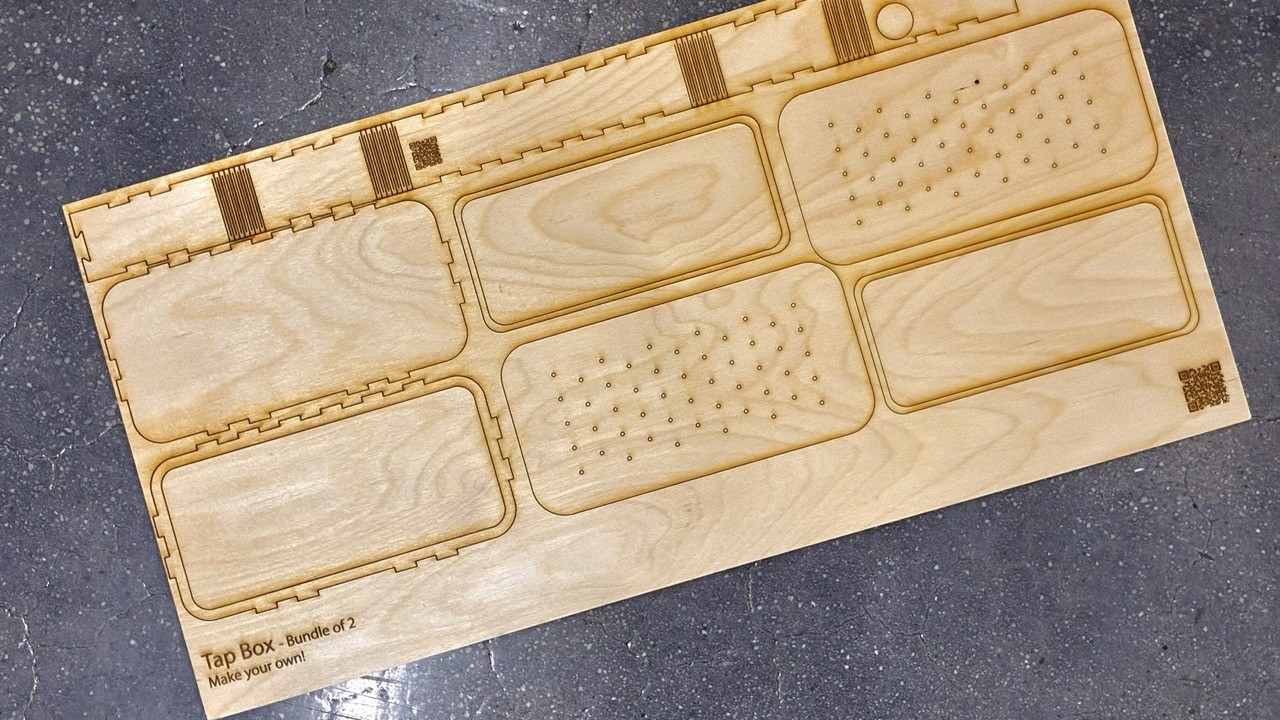
TapTap is a DIY, open-ended instrument kit based on the same logic as Driftwood. There’s no “correct” configuration. Users assemble their own surface using a pre-drilled base, curated sticks and materials of different lengths and textures, and modular attachments.
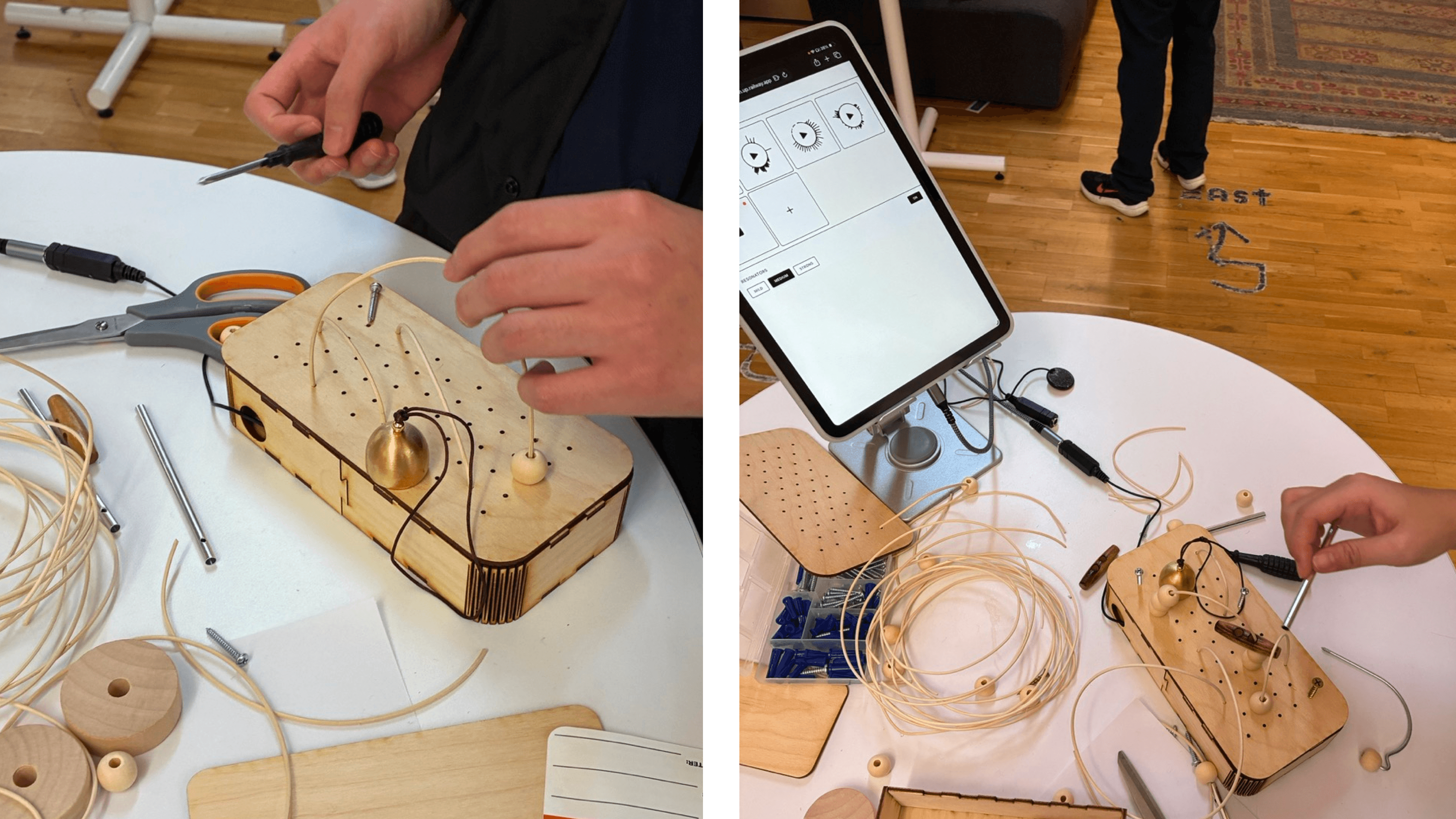
A lot of the materials are intentionally ordinary: chopsticks, household objects, things that don’t feel precious. The wooden parts are open-source and can be laser-cut locally or replaced with cardboard. I wanted the instrument's building process not to be intimidating.
A Product: Stays Minimal
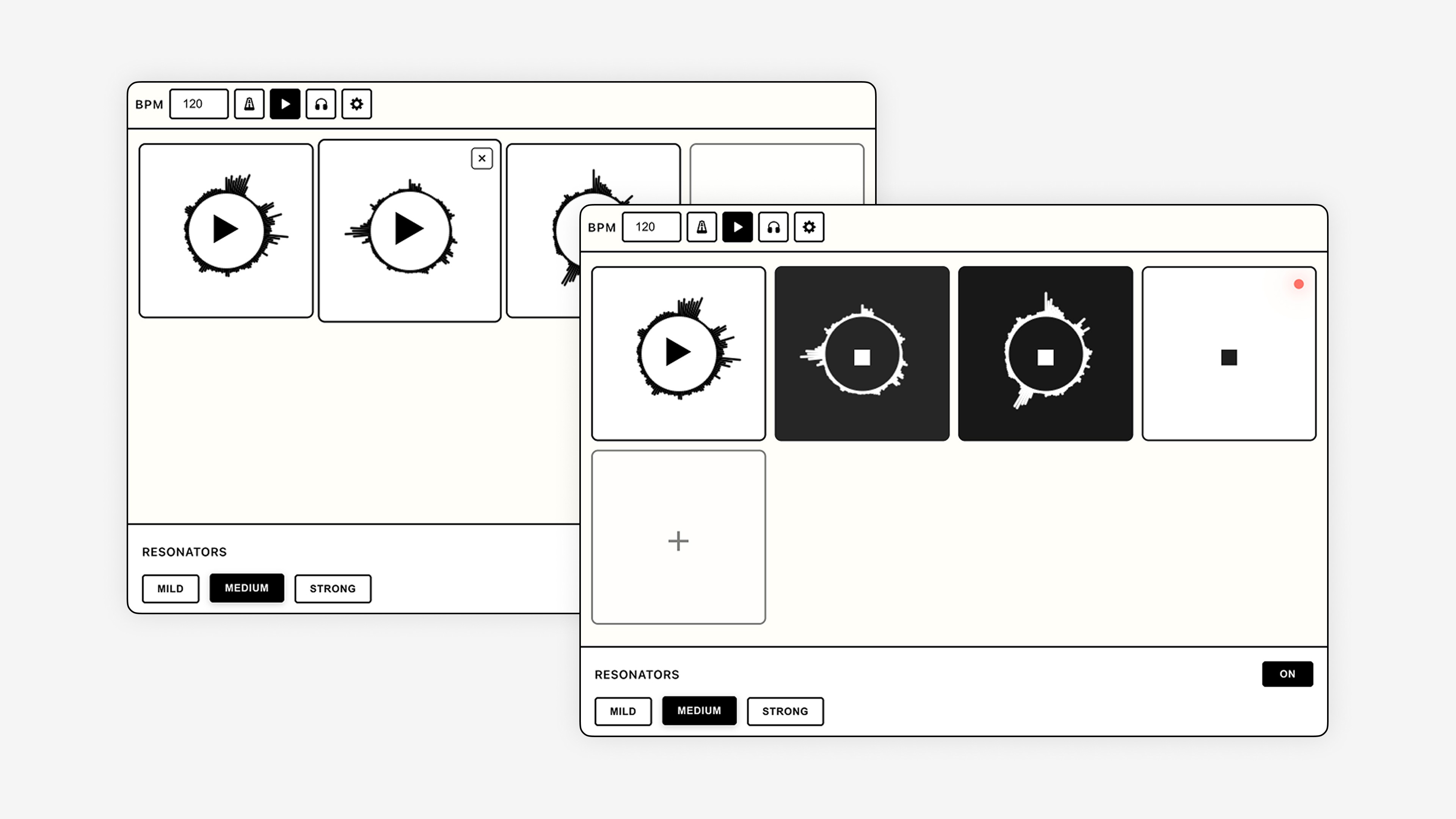
The software layer stays minimal. Users scan a QR code and enter a web-based interface where they can record sounds, apply effects, and experiment in real time. The focus should always be on active listening and not the technology.
This project keeps reminding me that music and listening start at the surface, in the hand, in the small negotiations between material, gesture, and attention.
Inspired by Wood: as Interface
I started by messing with wood first.
At the beginning, I was trying to laser-engrave pine boards with different depths and patterns. I wanted to see how texture might change the way a surface feels.
I created a box with the laser-engraved lid so it creates a resonance chamber, and then I assembled a contact microphone to it to route the audio to my laptop.
I tried to run my fingers across the surface, such as scraping, tapping, dragging, pressing, and listening through contact mics.
During the user tests, I asked the participants to try out different gestures to interact with the surface. I noticed that tiny differences in the patterns, engraving methods, and how people choose to interact with it mattered more than I expected.
A denser pattern made gestures feel heavier. Some areas responded immediately, others felt resistant.
At some point, I stopped thinking of the engravings as only aesthetics. The surface itself was shaping the sound with physical vibrations. Texture was the interface.
So instead of designing a predictable interaction, I started wondering what if the material doesn’t always respond the same way, and what if unpredictability actually act as a delight.
Driftwood: an Instrument
These experiments slowly pushed me to get a larger piece of basswood and start to work on it. It turned into an object I could carry, rehearse with, and perform: the Driftwood.
Driftwood is built from wood, metal elements, and contact microphones. The surface has rods, plates, strings, and friction areas. Each element transmits vibration differently. Some respond to light touch, others only respond with heavier pressure.
The instrument reacts to gesture and weight. The sound that came out of it is super unpredictable. Three contact mics capture vibration directly from the wood and feed it into Ableton Live, where I use a customized resonator system built with Max/MSP for post-processing.
I performed Driftwood at Littlefield NYC in December 2025. During that performance, I tried to listen to the differences between different rehearsals. I grew up around natural soundscapes and learned to actively listen to subtle details. On stage, I was trying to recreate that kind of listening.
From a Personal Object to a Shareable System
After a while, Driftwood started to feel limited in a way. It was beautiful for my own performance, but also large, fragile, and personal. Only I knew how to play with it. That raised a question: if texture is something you learn through touch, how can someone else learn this without borrowing my instrument?
That led to TapTap.
TapTap is a DIY, open-ended instrument kit based on the same logic as Driftwood. There’s no “correct” configuration. Users assemble their own surface using a pre-drilled base, curated sticks and materials of different lengths and textures, and modular attachments.
A lot of the materials are intentionally ordinary: chopsticks, household objects, things that don’t feel precious. The wooden parts are open-source and can be laser-cut locally or replaced with cardboard. I wanted the instrument's building process not to be intimidating.
A Product: Stays Minimal
The software layer stays minimal. Users scan a QR code and enter a web-based interface where they can record sounds, apply effects, and experiment in real time. The focus should always be on active listening and not the technology.
This project keeps reminding me that music and listening start at the surface, in the hand, in the small negotiations between material, gesture, and attention.
Driftwood: a Littlefield NYC Performance
Sound of the Wood is a series of experimental instruments exploring sound as both a physical system and a subjective experience. Through wood, texture, and gesture, the project treats material properties as interfaces for making music. Spanning handcrafted objects, digital processing, and modular toolkits, it investigates how sound emerges between control and ambiguity, analog and digital, structure and interpretation.
Year
2025
Year
2025
Role
performance
Role
performance
Client
This is a personal project.
Client
This is a personal project.
Timeline
6 months
Timeline
6 months
Driftwood: a Littlefield NYC Performance
Sound of the Wood is a series of experimental instruments exploring sound as both a physical system and a subjective experience. Through wood, texture, and gesture, the project treats material properties as interfaces for making music. Spanning handcrafted objects, digital processing, and modular toolkits, it investigates how sound emerges between control and ambiguity, analog and digital, structure and interpretation.
Year
2025
Role
performance
Client
This is a personal project.
Timeline
6 months