Insight
In screenless hardware interfaces, clarity comes from timing, tactility, and feedback rather than visual cues. Advanced features like EQ switching must be discoverable yet intentionally gated, so they do not interfere with high-frequency actions such as volume or playback control.
Solution
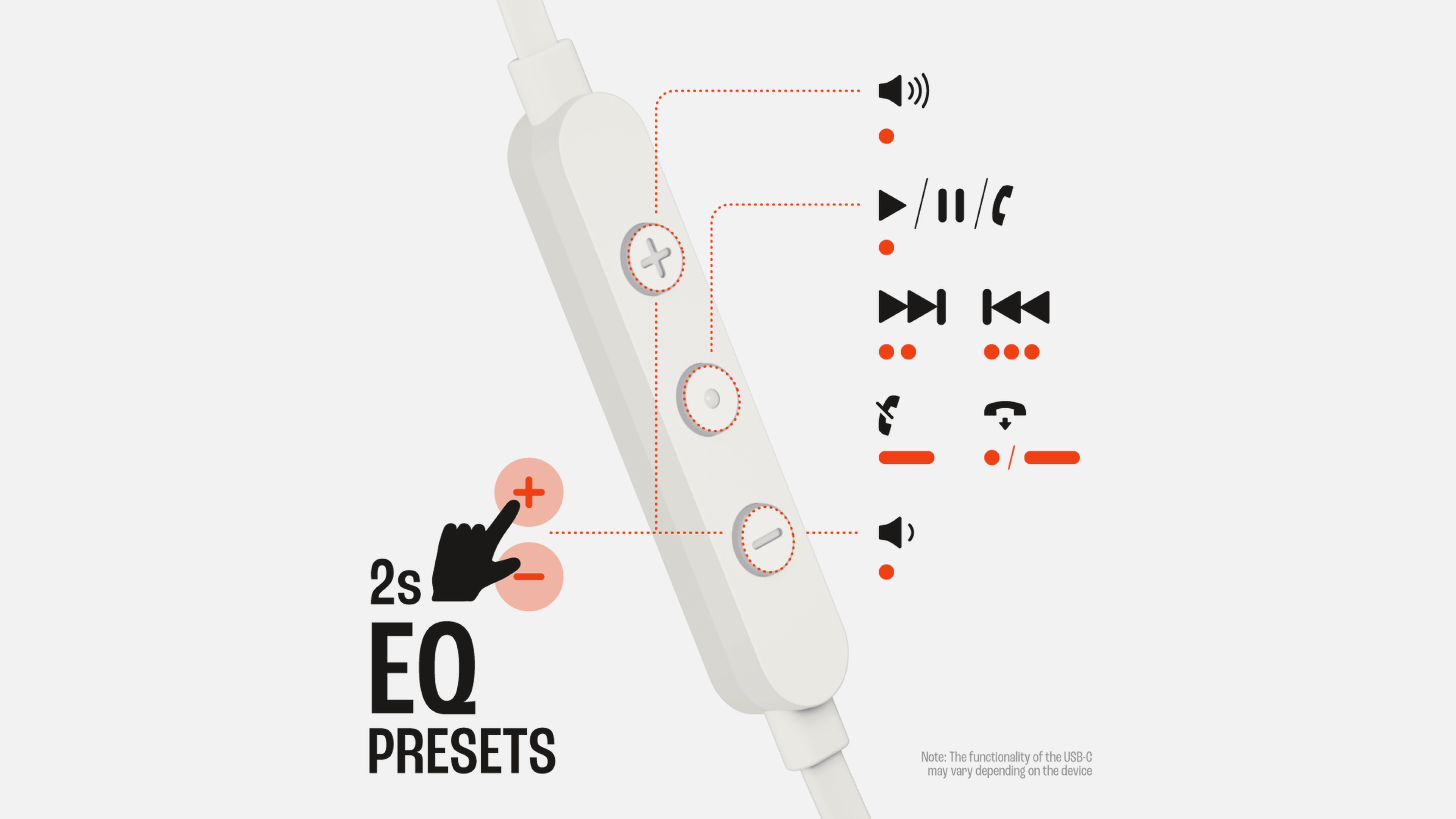
Button Interaction System
The three-button controller is designed as a layered interaction system rather than a set of isolated actions. High-frequency actions are prioritized through short presses, while low-frequency, high-impact features such as EQ switching are gated behind deliberate long-press gestures.
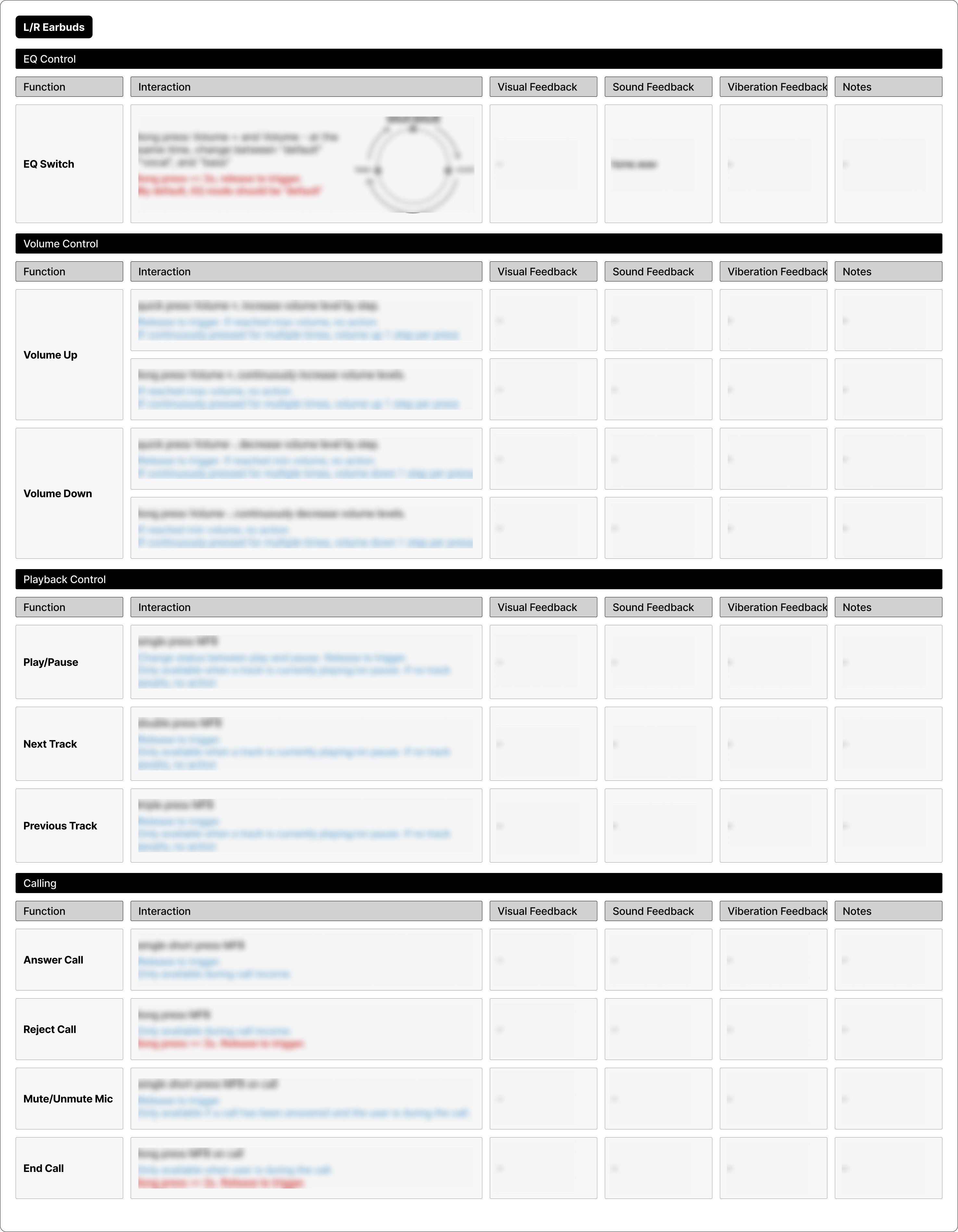
Design Ops: Hardware UX Design System
When I joined the team, HARMAN was in the process of standardizing hardware interaction design systems within Figma. Through this project, I contributed to refining and extending that system by clarifying interaction definitions, press-timing rules, state transitions, and feedback mappings for physical controls. I also built reusable Figma components to translate these rules into executable design artifacts and accelerate iteration.
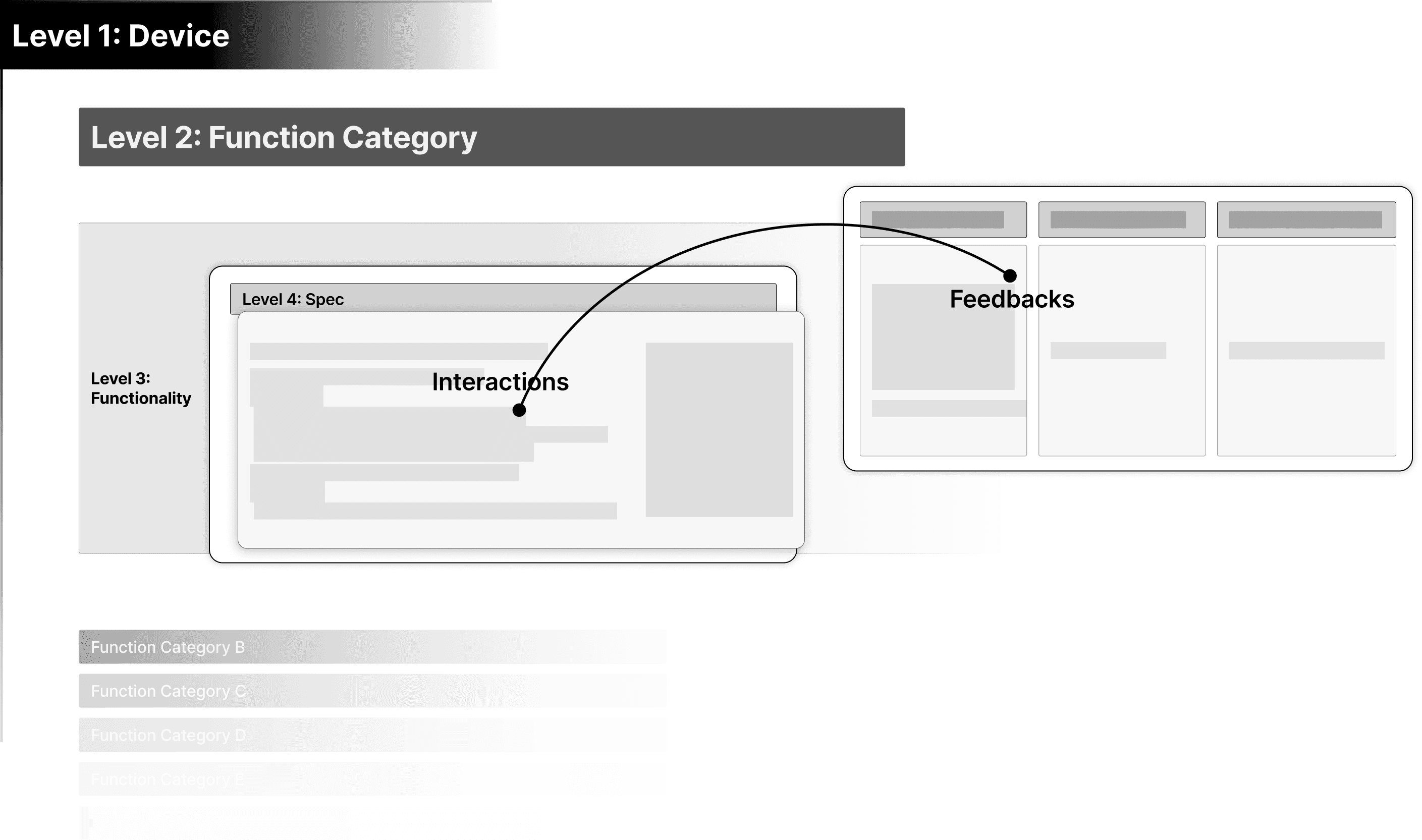
Because there is no widely adopted industry-standard template for hardware interaction design systems, this work required exploration and continuous iteration. The resulting improvements increased clarity and reusability, aligning design, firmware, and QA around a shared interaction language while informing future hardware development.
Sample Component
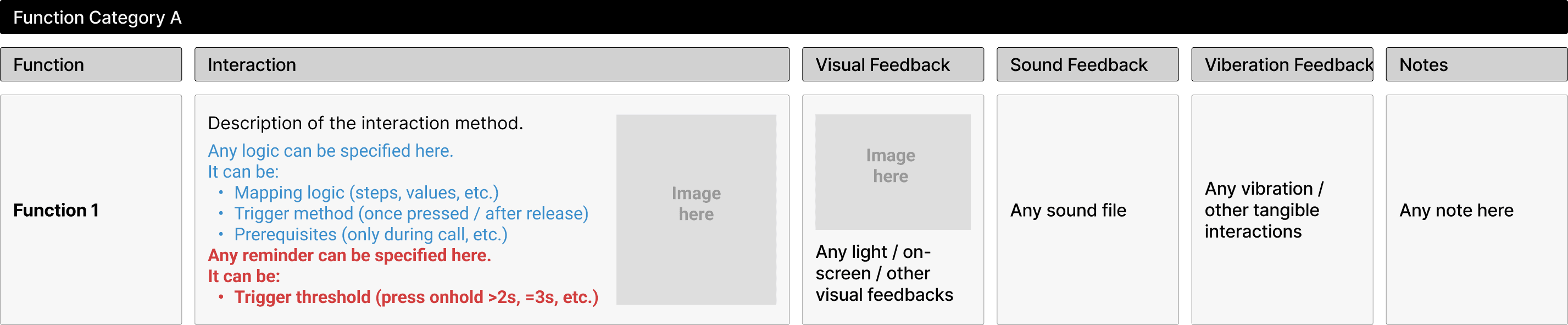
Sample UI Specification